Biodegradability vs barrier properties in packaging. Where’s the compromise?
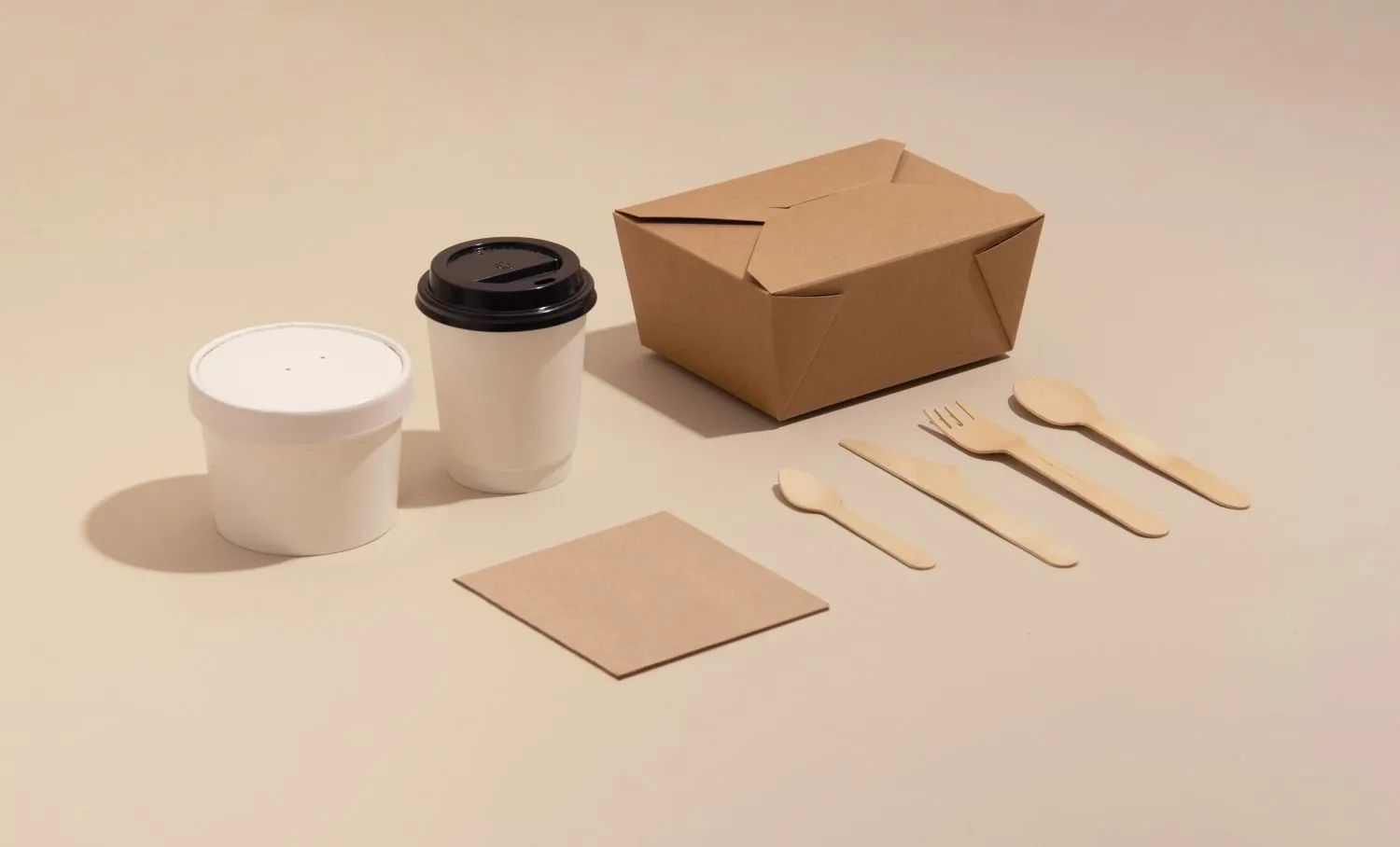
Packaging companies are increasingly trying to find environmentally-friendly solutions to package consumable products, such as food, beverages, pharmaceuticals, etc. Packaging contributes roughly 40% of the global waste expenditure and plastic consumption for packaging is set to triple by 2060. The key is to find a biodegradable alternative that is both easy to break down at end-of-life, but also protects the contents of the packaging during storage. Keeping out oxygen, moisture, light, and microbes is paramount for the end user, but balancing these criteria with biodegradability remains a challenge to the packaging industry.
Packaging requirements in the food & bev industry
Food and beverage packaging has to preserve quality of the contents as oxygen can lead to browning, texture loss, and flavour degradation. Furthermore, microbial growth can rapidly spoil the contents of the packaging. Many biodegradable base materials, such as polylactic acid (PLA), starch, and cellulose, lack the gas and vapor permeability resistance needed to meet the requirements for preserving food products with long shelf lives. Therefore, many packaging companies do not rely on a single material, but prefer to blend or layer two or more materials. However, this increases the difficulty of separating them at end-of-life, for full biodegradability.
Novel packaging solutions in the food & bev industry
New solutions coming through from academia focus on multilayer biopolymer systems whereby performance can be tuned without sacrificing end-of-life biodegradability. This can include using natural waxes and lipids to improve hydrophobicity and moisture performance, or using soy and pea proteins to improve the oxygen barrier qualities. Surface treatment of nanocellulose is also a promising route and has the added benefit of being lightweight with good tensile strength. Examples of innovation include J&J Green Paper’s JANUS coating, which uses rice bran wax (a byproduct of rice oil production) and offers barriers against water, grease, and oxygen. It was adopted recently by McDonald’s Argentinian franchise brand (Arcos Dorados) for their primary bags and hamburger wrappers. Similarly, Archroma launched a water-based, bio-derived barrier coating offering oil and grease resistance for paper and board packaging. Their goal is to replace fluoro-based substances (PFAS chemicals) and polyethylene. Strategic Allies also published a Tech Spotlight for Kelpi, a young British company with a seaweed-based bioplastic solution to give pulp and paper packaging a strong water barrier. They work with brands to incorporate the material into their packaging solutions to minimise fossil-fuel plastic barrier linings.
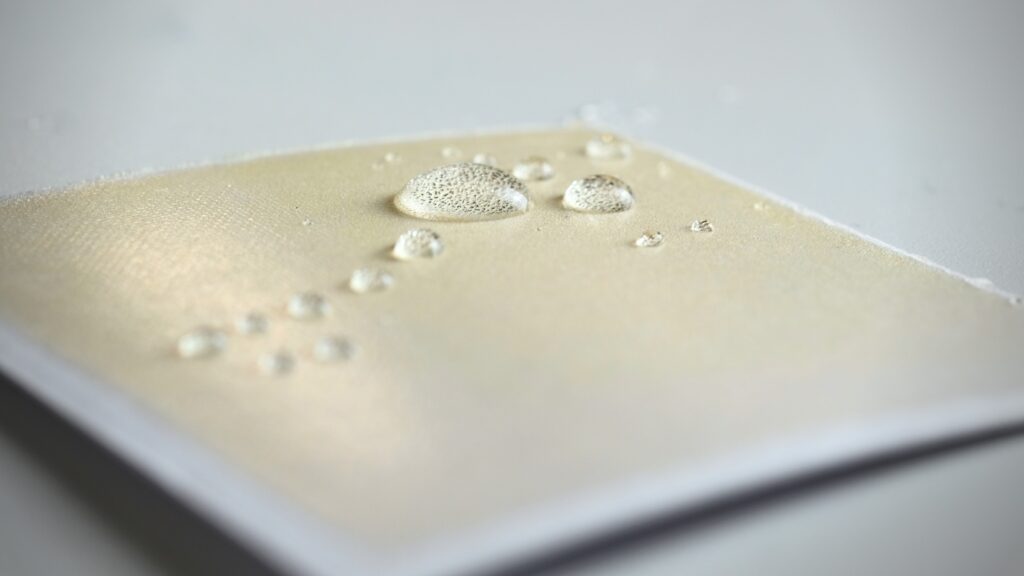 Kelpi Water Barrier
Packaging requirements in the pharmaceutical industry
Another industry with even tighter restrictions on barrier properties is the pharmaceutical sector. As with food packaging, the very properties that make a material compostable e.g. open molecular structures, hydrophilicity, and susceptibility to microbial attack, tend to undermine its ability to shield moisture-sensitive or oxygen-sensitive drugs. Similarly, solutions revolve around the use of multilayered and blended biopolymer films such as PLA with additives such as nanocellulose and nano clays, enabling these materials to provide enhanced moisture resistance and structural integrity without compromising biodegradability.
Novel packaging solutions in the pharmaceutical industry
Biodegradable materials used in the pharmaceutical industry tend to be applied to secondary packaging (packaging that is not directly in contact with the medication e.g. the carton that blister packs are packaged in), but there is evidence of renewable packaging innovation for primary packaging. In 2024, UPM Biochemicals, Selenis and Bormioli Pharma partnered to produce the world’s first pharmaceutical bottles made from partially wood-based PET. The strategy in this instance was to use a material (PET) that was already known to meet pharmaceutical-grade criteria, but source it from non-fossil fuel sources, making the final solution carbon-negative. Elsewhere, in 2025, Avantium N.V. collaborated with BIOVOX to develop a packaging solution made of polyethylene furanoate (PEF), a renewable polymer derived from furandicarboxylic acid (FDCA). These collaborations show evidence of the desire for sustainability in this highly regulated sector, highlighting that the goal of biodegradability has not yet been fully achieved, but that companies are actively working towards fossil-fuel based material reduction.
In conclusion, this article seeks to highlight the scale of waste generated by the packaging industry, and the avenues that are being explored to mitigate the volume of landfilled material. In an ideal world, packaging would be 100% circular, allowing reuse of materials, and a large reduction in landfilling and virgin material requirement. In reality, we do not yet have the proven technology nor infrastructure to achieve this but a low-hanging fruit could be to use sustainable feedstocks as well as improving the biodegradability of the material anticipated to reach landfill. Differing requirements across industries have dictated which path packaging companies have taken in addressing this with food moving towards biodegradability and pharma looking at sustainable material selection. Strategic Allies Ltd is following these innovations closely and is available to help companies understand the evolving market landscape, as well as carry out defined technology scouting projects, fit to your defined needs.