Kelpi
The barriers to paper packaging adoption
Paper and pulp based packaging are attractive sustainable alternatives to plastic. They are made from renewable feedstocks and have a high recycling rate, more than 70% according to UK government statistics. As a result, many industries are seeking to shift away from conventional plastic packaging towards paper based solutions. Reports published in 2025 predict this trend will continue to 2030, with paper packaging growing while plastic usage will drop in some sectors.
However, a direct swap from plastic to paper is far from straightforward. Paper struggles to perform well in certain applications that require strong barrier properties, such as liquid packaging where leakage can occur. It is also less suitable for many food-packaging applications, as it cannot preserve freshness. In both cases, the fundamental issue is paper’s poor barrier performance, whereas plastics typically provide excellent protection against moisture and oxygen.
To overcome these limitations, paper packaging for food and liquids usually requires an additional barrier coating. Traditionally, these coatings are plastic-based and applied to the paper surface. While effective, this approach undermines the sustainability benefits of paper by complicating recycling processes and reintroducing plastic into the packaging system. We explored this topic in a recent article: Barrier Coatings – The Silent Threat to Recycling Efforts.
Seaweed to the rescue
Kelpi has developed an innovative solution to address the challenges associated with barrier coatings and help accelerate the transition to paper packaging. Founded in 2020 and based in Bristol, UK, the company was established with a clear mission: to combat plastic waste and improve recycling outcomes.
The co-founders were frequently confronted with plastic pollution while enjoying their outdoor pursuits of sailing and cycling, which inspired them to take action. They recognised paper as a promising route to reducing plastic use, but also understood that new, sustainable barrier coatings would be essential if paper was to become a viable alternative in demanding packaging applications. In response, Kelpi developed a biobased barrier coating designed to replace fossil-derived plastic coatings.
Kelpi’s coatings are derived from seaweed, which the company functionalise with sustainably sourced vegetable oils to produce their novel barrier materials using a patented process. Seaweed was chosen as a feedstock due to its exceptional sustainability credentials: it is a fast-growing, low-resource crop, capable of growing up to 60 cm per day, without the need for freshwater, fertilisers, or arable land.
Stopping water, oxygen and plastic waste
Kelpi’s coatings function as effective oxygen barriers and offer strong water resistance, protecting products packaged in paper and pulp-based materials. They also provide oil and acid resistance, significantly expanding the range of potential applications. The coatings are heat-sealable, enabling straightforward integration into existing packaging, and are certified home recyclable so can be simply placed in your kerbside recycling. Their materials are also biodegradable in case it enters the natural environment.
At the end of life, the coating delaminates from the paper substrate, allowing the paper fibre to be efficiently recovered during recycling. The barriers are produced from 100% biogenic carbon, making them an attractive sustainable alternative to fossil-derived barrier materials. Kelpi works closely with packaging partners, supplying its coating material in pellet or powder form, which can then be processed into a finished layer and applied to the paper packaging.
Partnerships and prototypes
Kelpi’s barrier coatings can be tailored to specific consumer applications, with the company conducting extensive testing alongside food, beverage, cosmetic, and homecare organisations. Current R&D partnerships include collaborations with Blue Skies for fresh fruit packaging; Diageo, where the barrier is being tested for fibre-based bottles; and L’Oréal, with Kelpi selected as one of 13 innovators from 1000s of applicants to take part in the L’Oreal accelerator programme. The company are also working across a broad range of sectors including homecare.
Across these prototypes, packaging incorporating Kelpi’s coatings has demonstrated performance comparable to, and in some cases exceeding, that of conventional plastic packaging.
First stop – tackling the sachet problem
While Kelpi has tested its technology across multiple packaging formats, its first commercial focus is on an often-overlooked but highly polluting and wasteful segment: single-use sachets. These small, flexible packages are typically plastic-based, with their contents frequently requiring long shelf lives—something paper alone cannot provide. Single-use sachets are common in food applications, such as condiment packs like ketchup, but are also used in cosmetics and homecare as convenient single-dose products.
The environmental impact of sachets is particularly acute in low-income countries, where their use is widespread. They are difficult to recycle due to their small size, post-use contamination, and multi-material construction.
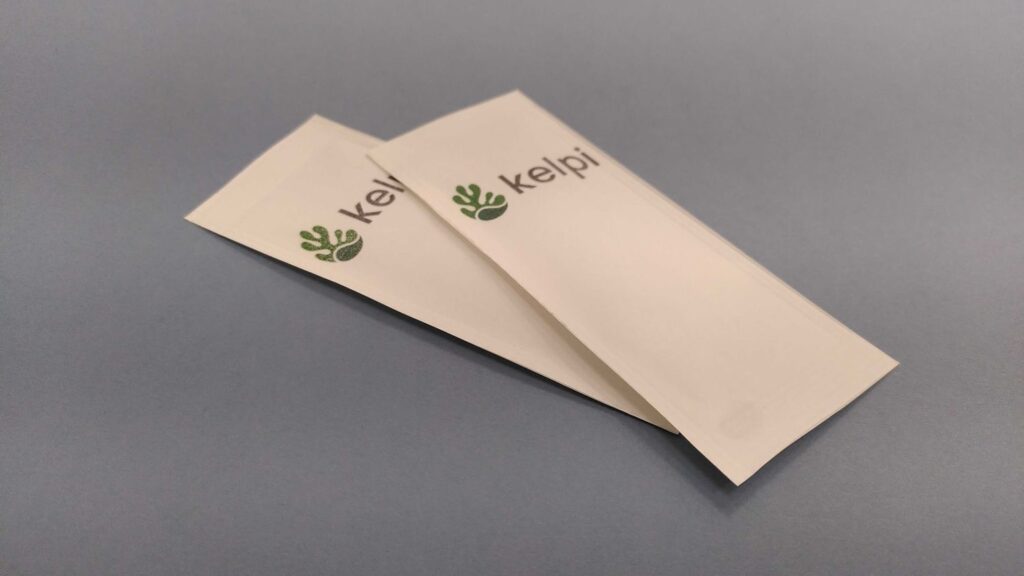
Working with a commercial partner, Kelpi has successfully tested paper-based single-use sachets incorporating its barrier coatings. The materials are designed to significantly reduce the environmental footprint of this problematic packaging format by removing fossil-derived plastic from the equation. Kelpi plans to launch its first commercial product in the coming months: a barrier coating intended for non-food-contact single-use sachets.
Food-contact approval is currently in progress, with their materials already being food compliant in Canada, with expected US approval later this year and UK / EU approval projected for 2027. With food contact approval, their material will expand into food applications next.
Coming to a supermarket near you?
Kelpi is actively seeking to engage with packaging manufacturers and brands or retailers interested in adopting its barrier coatings. With its first product launching later this year, the company is keen to collaborate with organisations using small format flexible packaging that can integrate this. Kelpi is also particularly interested in expanding into the Canadian market, where its materials already have food-contact acceptance. They are interested in investment and are opening their Series A funding round later in the year.
As paper-based packaging continues to gain momentum, we are excited to see the active role Kelpi will play in this journey, and hopefully see Kelpi containing products at a supermarket soon!
If you are interested in speaking with Kelpi, please reach out to Strategic Allies and we would be happy to make an introduction.