Woodly

The plastic waste problem is thankfully becoming a widely discussed topic, with EU governments beginning to implement clearer and more decisive actions. Companies are also responding.
At Strategic Allies, we have seen a growing number of innovators developing bioplastics from alternative feedstocks. However, despite their promise, these solutions often face challenges integrating with existing plastic infrastructure and frequently struggle to match the performance of conventional plastics. This is now set to change.
Beyond “Reduce, Reuse, Recycle”
When we consider strategies to combat waste generation, many of us are familiar with the expression “Reduce, reuse, recycle”. Unfortunately, for some products and industries, this simply isn’t possible. Woodly believes an extra word should be added: “Rethink.”
Rethinking Plastics Without Compromise
This is exactly what Woodly has done; rethinking plastics to reduce environmental impact without sacrificing performance. Its wood-based plastic is designed as a drop-in alternative to fossil fuel–based plastics, using renewable wood cellulose as feedstock and allowing manufacturers to work within existing production systems. They produce thermoplastic granulates which manufacturers use to produce finished plastic products.
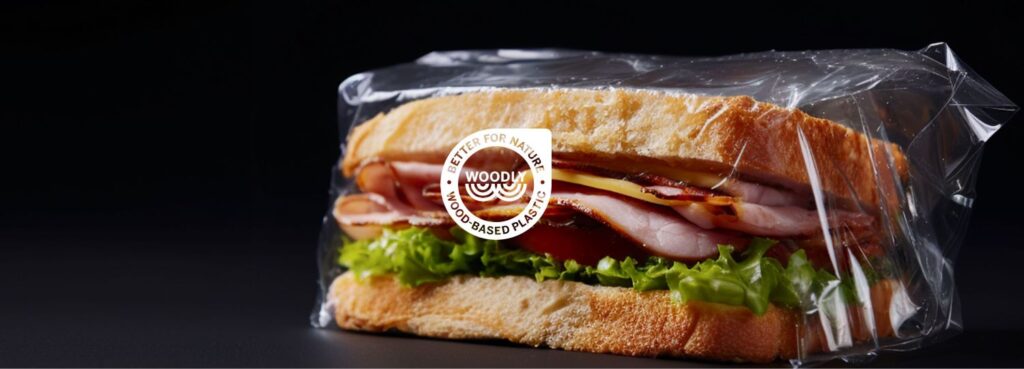
Founded in 2011 in Finland, Woodly initially focused on optimising the performance of its patented thermoplastic compound. The first commercial application made from Woodly was a sandwich bag, demonstrating that existing manufacturers could utilise the material. Since then, the use of Woodly has expanded into other food packaging applications, where extended shelf-life properties have led to increased sales and reduced food waste. As of 2025, the company has expanded to the UK, establishing a supply chain to serve retail and food-to-go segments.
Designed for Scale, Not Disruption
Woodly believes the plastic industry is here to stay, and that more sustainable plastics must work within existing infrastructure to achieve real-world scale. Its feedstock is carbon negative, made from wood pulp sourced from FSC-certified producers.
The company offers several grades suitable for applications ranging from polymer films used in the food industry to rigid, reusable plastics, such as cosmetics packaging or plastic cups at sporting events.
Performance That Reduces Food Waste
Film packaging made from Woodly’s patented granulates demonstrates enhanced performance in food-packaging applications compared with conventional plastics. In certain fresh product categories, such as sandwiches, vegetables, and fruits, they can increase shelf life by approximately three to five days.
This is due to high oxygen and water transmission, which helps prevent condensation buildup. These films are approved for food contact and are already in use in commercial food-packaging applications.
End-of-Life Still Matters
End-of-life is a critical consideration for plastics. While Woodly-based plastics are not biodegradable or compostable, like most bio-based plastics, they offer several important environmental benefits.
Single-use plastic packaging films have a recycling rate of just 7% in the UK, with the rest typically being incinerated. Woodly-derived plastics can deliver up to 67 % lower fossil CO₂ emissions compared with conventional fossil-based plastics when they are incinerated. In addition, materials composed of Woodly materials can be mechanically recycled with existing recycling technologies, with studies indicating recyclability of up to five cycles.
Looking Ahead
Products made from Woodly® are already manufactured at scale. The company is keen to engage with plastic producers to support material integration, as well as with major plastic users, such as supermarkets, seeking to reduce CO₂ emissions and food waste.
If you are interested in speaking with Woodly, please reach out to Strategic Allies, and we would be happy to make an introduction.
Images courtesy of Woodly