Sealeo
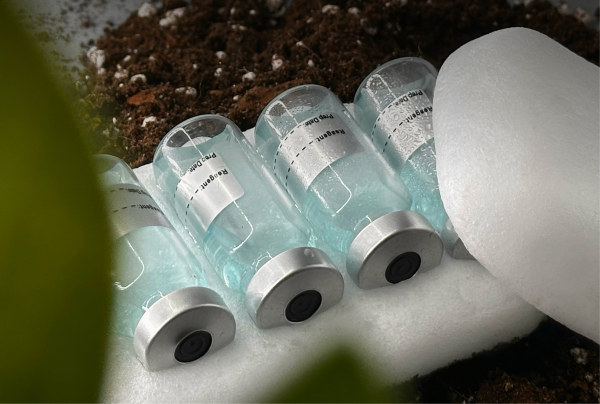
Seaweed-based packaging for pharmaceutical cold chain logistics – moving beyond expanded polystyrene.
Pharmaceuticals and single-use plasticsThe pharmaceutical industry and single-use plastics go hand in hand. Single-use plastics are essential to some applications, such as syringes and blister packs, and they are also widely used in packaging. We have previously undertaken an exploratory landscape on single-use plastics in the pharmaceutical industry, investigating innovations in the space. While some promising early‑stage solutions exist, adoption remains limited. However, change seems inevitable, especially with new regulations on the horizon.
The problem with keeping things cool
As consumers, we can clearly see single-use plastics in products like blister packs, but there is another huge area we rarely see, cold chain logistics.
Around 40 – 60% of all pharmaceuticals require strict temperature control to keep them active and safe. If the medicines undergo temperature changes, they will likely be disposed of, and up to 50% of vaccines have historically gone to waste, with temperature breaches being a major factor. Cold chain logistics are critical for transporting these temperature‑sensitive medicines, particularly in the “last mile”, when they move from a distribution centre to their final destination.
Various methods are employed to monitor temperature variations in transit, and we recently undertook a project involving Next-Gen Tracking Technologies for Global Packaging Company, investigating some of these innovative active and passive tracking technologies available, but these don’t actually keep them cool.
In practice, keeping medicines cool relies mostly on passive methods: medicines are packed in expanded polystyrene (EPS) boxes with cooling packs. The cooling packs absorb heat, while the EPS insulation slows temperature changes, keeping the medicine cold. Unfortunately, most of these boxes are single‑use, and more than 65% of EPS boxes from pharmaceutical cold chain logistics end up in landfills. This simple approach has dominated the transport of medicines for over 30 years.
Disrupting cold chain logistics
Sealeo was founded with a vision to create a new sustainable passive cooling technology. They have developed two innovative seaweed-based products to transform the cold chain: an alternative coolant to replace traditional gel packs, and a biodegradable biofoam to replace EPS.
Both products are made entirely from seaweed and are fully biodegradable, offering a more environmentally friendly solution for temperature‑sensitive medicine transport. Seaweed is an ideal feedstock for sustainable packaging because it grows quickly and does not compete with food or land resources. Sealeo keeps production local by sourcing its seaweed from Scotland, supporting homegrown, sustainable manufacturing.
Two for the price of one
Sealeo’s underpinning research arose from a master’s project while the founders, Emanuele Griccioli and Diana Epel, were studying Innovation Design Engineering, run jointly between Imperial College London and the Royal College of Art. Their first innovation was a bio-based cooling material derived from seaweed, designed to regulate temperature through mechanisms similar to those used in phase-change cooling systems that absorb latent heat from the environment. They patented this material and began optimising its performance as a sustainable alternative to conventional cooling packs.
During this development process, a serendipitous discovery led to the creation of a second material with properties similar to expanded polystyrene (EPS), resulting in a biodegradable insulation foam derived from the same renewable feedstock as the cooling material.
Sealeo initially focused on the pharmaceutical sector, recognising the critical role of passive cooling in transporting temperature-sensitive medicines and anticipating upcoming regulatory changes. They are part of Innovate UK’s Sustainable Medicines Manufacturing Innovation Programme, collaborating with other teams across the value chain to help decarbonise the pharmaceutical sector.
Their cooling gel operates effectively within the 2 – 8 °C window, one of the most important temperature windows for pharmaceutical cold chain logistics, and can keep this temperature for 2.5 times longer than conventional gel packs of the same volume, making it a practical, sustainable and superior solution for the sector.
Cooler than polystyrene
Sealeo has been testing its products for the past 18 months, comparing them with the traditional materials used in pharmaceutical cold-chain logistics. Their seaweed-based solutions are not only biobased and biodegradable, helping reduce the carbon footprint of packaging, but they also outperform EPS.
Studies show that less biofoam is needed to achieve the same insulation as EPS, thanks to a 30% higher thermal resistance compared with EPS. Unlike many other sustainable alternatives, Sealeo’s materials can be more compact than conventional methods, reducing transport volume and lowering costs. In fact, their solution is expected to deliver up to 38% savings on distribution costs.
Moving forward
Sealeo is actively engaging with pharmaceutical companies and packaging manufacturers. Their goal is to integrate these sustainable solutions into existing manufacturing processes, making adoption easier across the industry.
They are seeking partners who can test their products in real-world cold chain settings, helping to evaluate performance and create datasheets for their solutions. These collaborations will guide Sealeo in defining the final product formats and identifying the types of transport where their materials perform best.
The company is also preparing to raise a pre-seed investment round within the next 12 months, enabling them to scale up and move into the next phase of development. We look forward to following Sealeo’s journey as they help decarbonise the pharmaceutical sector and eventually expand into other markets.
If you are interested in speaking with Sealeo, please reach out to Strategic Allies, and we would be happy to make an introduction.