HUID
Truly circular packaging using onion skins
Waste packaging is a huge problem, with the UK alone producing over 12 M tonnes annually. Despite our best efforts in recycling, only 44% of plastic waste is actually recycled, and although this rises to 69% for paper and cardboard, it still equates to over 1 M tonnes of each material type not being recycled. You may have seen our recent article on the topic: Tackling the problem of plastic waste. In the meantime, sustainable packaging solutions have emerged as avenues to help reduce the impact of fossil-derived packaging, with many large companies and start-ups operating in the space.
Regulatory drivers and shifting consumer demands have resulted in a surge in paper and pulp-based packaging solutions which benefit from avoiding fossil feedstocks. However, there is a growing realisation that simply switching plastic packaging to paper is not the answer, with paper packaging often using virgin feedstocks resulting in deforestation and also using vast amounts of water to produce it. In addition, recycled fibres cannot be used in some industries, like food, due to the risk of contaminants being present. An ideal solution would be circular, exploiting an existing waste stream to produce it without impacting performance.
HUID have identified such a waste stream, producing food packaging products from an unlikely source, onion skins! They are also hoping to tackle additional problems which other sustainable packaging providers struggle to address – and paper alone cannot solve: improving the product shelf life. Plastic is amazing at doing this, providing excellent barrier properties and keeping our food fresh, but other packing solutions struggle to do this, hence many paper products use petrochemical-based barrier coatings (see our recent article: Barrier Coatings – The Silent Threat to Recycling Efforts). HUID wants to exploit natural bioactives present in onion skins which can help introduce barrier properties and keep food fresh.
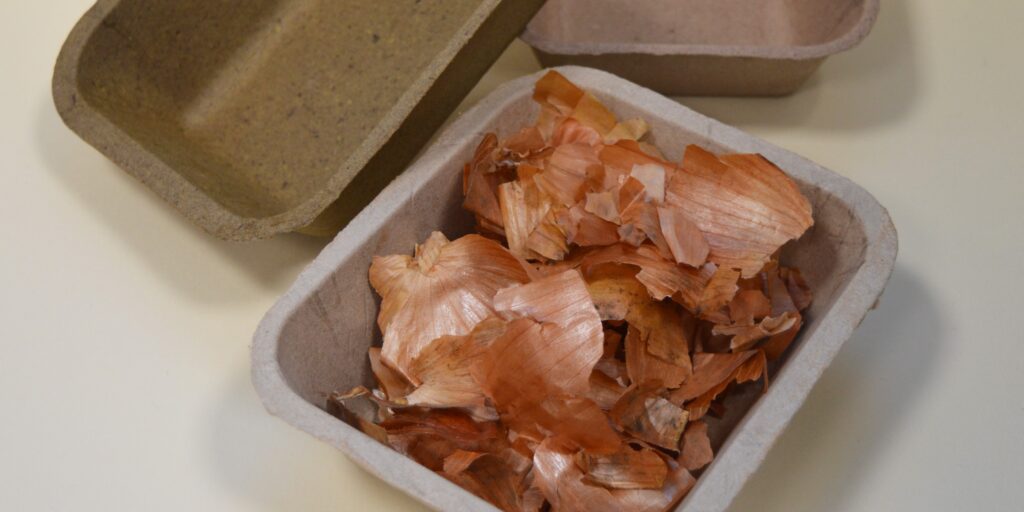
HUID, a start-up based on the West coast of Scotland in Oban, has developed a circular paper alternative for food packaging which does not carry the contaminant risk associated with recycled paper. They are also investigating two other products which exploit bioactive ingredients in onion skins to help prolong shelf life without using plastics.
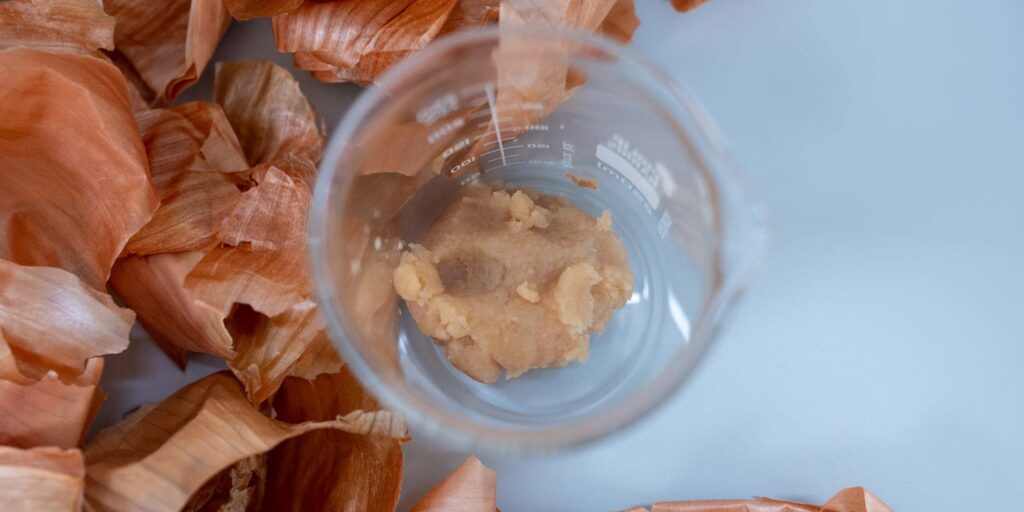
HUID is the brainchild of Renuka Ramanujam, originally from the textile and design sector. She was working with onion skins to extract dye compounds to be used in the textile sector, using prolonged boiling to release the pigments. During the extraction process, she realised that onion skins are incredibly robust and thought they may be interesting packaging materials. After digging deeper, characterising onion skins in depth, she decided to pursue it further and see what kind of packaging materials they could create.
So far HUID have three lead products they are investigating:
- The first is a moulded fibre-like product, with cellulose fibres from onion skin extracted and pulped into a punnet-like product. Their onion skin pulp product is superior to established wood pulp as it is 50% lighter while the longer-term durability is currently being tested. It is also easier to make, taking a modest 10 minutes compared to 2 hours for conventional wood pulp. In addition, they use milder and food-safe ingredients unlike wood pulping, ensuring their moulded fibre products are ideal for food packaging. This product is under further investigation with a TRL (Technology Readiness Level) of 7.
- The second product, still in the early phases of development, is a film-like product which acts as a polyethylene substitute for food contact products. Their film-based product is special as it incorporates bioactive ingredients with antibacterial and antimicrobial properties, with these bioactives potentially able to improve the food shelf life. This is currently being tested, and if successful would be a turning point for the sustainable food packaging space. This product is still in development with a TRL of 2.
- Finally, they are planning to combine the bioactives into their original food packaging product in the form of a coating, potentially allowing pulp-based products to keep food fresh without mixing plastics. This coating, like the film is currently in development with a TRL of 2.
Combine each of these and you generate a biodegradable, natural, circular packaging solution which could potentially improve the shelf life of food.
Onion skins offer other benefits: they are available worldwide, produced year-round and currently have no commercial value. In fact, when not composted on-site (a process that can be time-consuming), farmers often have to pay for their disposal. Current onions have been selectively grown to have extra layers of skin, this has been undertaken to prevent damage during processing. These extra layers fall off during processing, producing an abundance of waste skins, with a modest scale onion producer having to deal with tonnes of skin weekly.
HUID have developed, in-house, their own extraction and pulping processes and are preparing patents for these. They are currently optimising their process further and are speaking with onion producers and manufacturers to scale their process. HUID are hoping to ultimately license their technology to farmers who could finally make use of their otherwise discarded onion skins and produce value-added products on site!
HUID are looking for partners to support scaling effort, and are also planning to close a pre-seed round in September 2025 to help make that growth a reality! If you are interested in partnering or speaking with HUID please reach out to their CEO Renuka Ramanujam. We recently saw HUID present their technology alongside other amazing biotechnology solutions at the IBioIC event in Glasgow, while they have also pitched at the Better Futures Innovation Challenge organised by Sustainable ventures, the Virgin StartUP x Fiverr Female founders competition and they are part of Cohort 7 of the Greenhouse Accelerator by Undaunted, so we know they are generating lots of interest! They were also shortlisted at the inaugural BBIA Demeter Awards last year! We are looking forward to seeing how they progress and hopefully their sustainable, circular packaging materials will be in a supermarket near you soon!
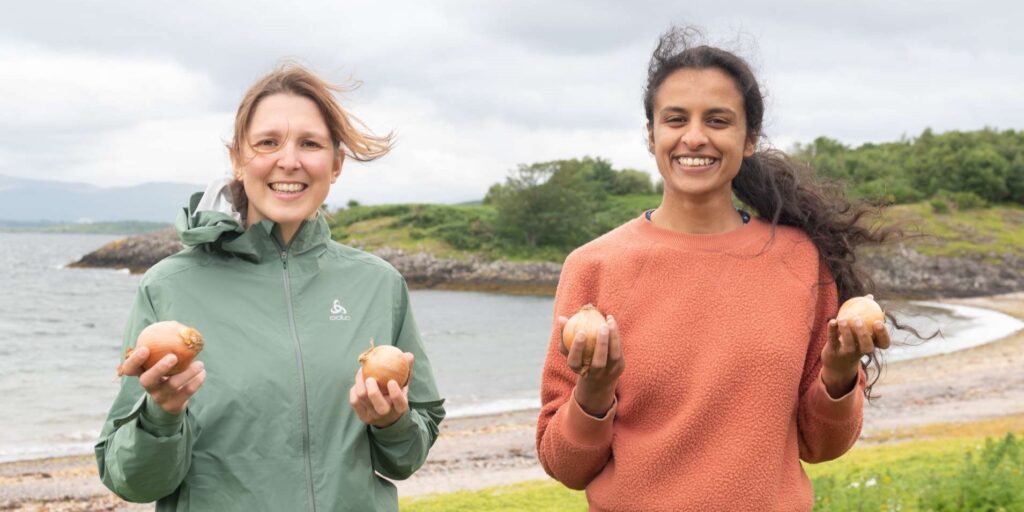 Dr Marie Rapin, CTO (left) and Renuka Ramanujam, CEO (right)