Digital Odour Technologies (dot)
Detecting pests and diseases using their unique scent biomarkers
Pest control
Pest infestations aren’t just an irritation, they come with a significant financial cost. A 2015 report estimated that infestations cost businesses £5.8 billion in control measures each year and cause an additional £11.8 billion in lost revenue worldwide. Bedbugs made up around 10% of the cases in that report, and they’re capable of overwhelming entire cities, as seen in Paris in 2023. Early detection is essential, and being able to predict when an infestation might occur is invaluable, allowing businesses to plan more effectively.
Digital Odour Technologies (dot) are using their unique scent sensing technology to help tackle the problem of pests and their first target is bedbugs, making the leisure industry more resilient to infestation challenges. But how does dot help hotels stay ahead of the problems?
Joining the dots
dot harnesses the power of scent molecules—the invisible chemical signatures produced by every living organism. These volatile gases are what we recognise as smells. They help us judge whether food has spoiled or identify certain ingredients in a meal. But compared with many animals, our sense of smell is limited.
In laboratory settings, scientists can analyse these molecules using large, highly sensitive instruments such as mass spectrometers. While incredibly accurate, this equipment is expensive and impractical outside controlled lab environments.
dot has developed a new way to unlock the information hidden within scents using compact sensors capable of collecting the necessary information to rapidly identify important scent signatures. Each scent signature can be linked to a particular pest, disease, or other source, allowing the system to “decode” these invisible signals. The science behind the technology originated from research at the London School of Hygiene and Tropical Medicine, from which dot later spun out.
Their first commercial product puts this innovative approach into action to help tackle the global bedbug problem.
Signs of insect infestation
dot has developed two approaches to address the global bedbug problem employing their expertise in scent detection. Their CEO, Prof. James Logan, describes them as an “analogue” and “digital approach”.
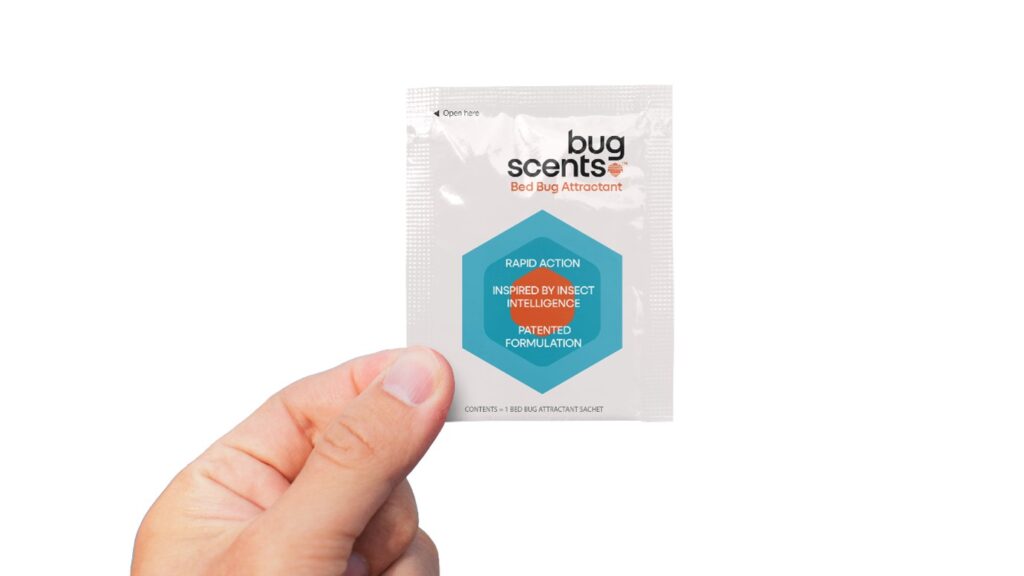
Analogue approach: dot’s first commercial product, already widely used throughout Europe and USA pest control and hospitality sectors, helps trap bed bugs early. dot used their sensing technology to identify a unique pheromone which bedbugs release and are naturally attracted to. They then made and patented a formulation which replicates this scent. Their device, BugScents Sentry Pro, which contains the attractant formulation, is a discreet and effective monitoring trap for bedbugs. Pest control and hotel staff can then check the unit regularly, giving them an early warning at the first signs of insect infestation.
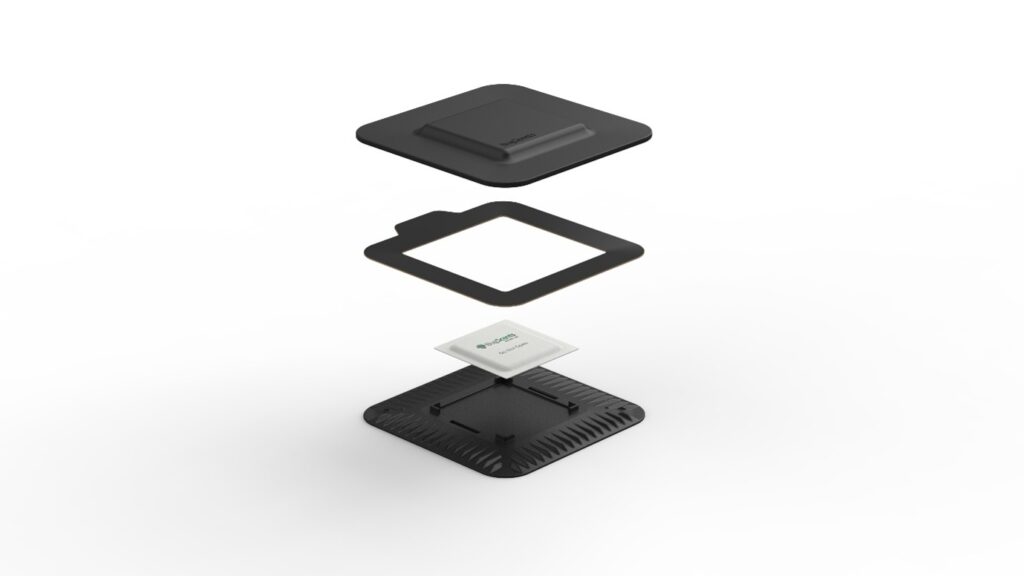
Digital approach: The company’s next step is a more advanced detection system powered by dot’s chemical‑sensing technology. The digital device passively detects the tiny molecules bedbugs give off as they move nearby. Impressively, the sensor is sensitive enough to detect the presence of a single bedbug, providing early detection. When a bedbug is detected, the device sends a digital alert to an online platform, which can map where and how often detections occur. This gives hotels real‑time insight into emerging issues and helps them act quickly before infestations spread. When this information is coupled with their proprietary AI powered data platform, dot.core™, they have the capability to provide predictive insight of when and where an infestation may occur.
Seeing the unseen
dot’s scent recognition platform is remarkably versatile and can be tuned to detect a wide range of volatile chemicals. These chemical signals can reveal valuable information in ways you might not expect.
Disease detection: When a person is ill, their body can release specific molecules associated with that condition. dot has demonstrated that different viruses and diseases affect the chemicals people emit, and their technology has the ability to identify certain illnesses with up to 99% accuracy in a recent study.
Environmental protection: In partnership with the Scottish Government, dot is using its sensing technology to monitor wildlife without disturbance. Their technology can detect a unique chemical signal associated with puffins, allowing researchers to tell when the birds are inside their burrows—no cameras or physical intrusion required.
Smart home sensors
dot ultimately envisions their detection technology becoming part of everyday life—embedded not only in businesses but eventually in people’s homes. A single device will have the capability to detect different chemical signals, offering a level of continuous insight that hasn’t been possible before. From monitoring indoor environments to identifying early signs of issues we can’t see or smell ourselves, these smart home sensors could provide a new layer of awareness in day‑to‑day living.
The data captured by these sensors can also be combined with their dot.core™ platform to help predict potential problems before they arise, giving users a proactive way to manage everything from pests to environmental changes.
Agricultural sensors
dot’s sensing systems are also well‑suited to agricultural environments, where early detection is just as important. Their technology can be adapted to be placed directly in fields or even mounted on drones, allowing farmers to identify when pests are present by detecting the specific chemical signals the pests, or the plants themselves under stress, release. This means farmers can react quickly, and pesticides or fungicides can be used only when necessary, helping to reduce costs and minimise the environmental impact of these pest control measures.
The technology has the potential to detect when plants are under other stresses—such as during drought or disease—because plants emit distinctive chemical markers when they are struggling. By spotting these signals early, farmers can respond quickly and protect crop health.
dot.discovery™
dot offers others unique access to their scent platform by working closely with partners to develop tailored sensing solutions. Over time, the company has built a vast library of scents and the chemical signals they relate to. This means that organisations can approach dot with a specific sensing challenge, and the team can recommend prototypes from their existing library—or create a completely new solution if needed. They can quickly develop proof of concept products for customers and help optimise further. dot are open to speaking with potential partners about their sensing needs, with the potential to use existing methods or create something new.
The team is particularly keen to collaborate with innovators in agricultural technology. Their remote sensing technology has promising applications across pest control, crop science, livestock management, and horticulture. dot recently opened an office at Rothamsted Enterprises, a leading agricultural research centre, to support these developments and continue advancing their work in this sector.
If you are interested in speaking with dot, please reach out to Strategic Allies and we would be happy to make an introduction.
Images courtesy of Digital odour technologies