Arda Biomaterials
Transforming waste proteins into high performance materials
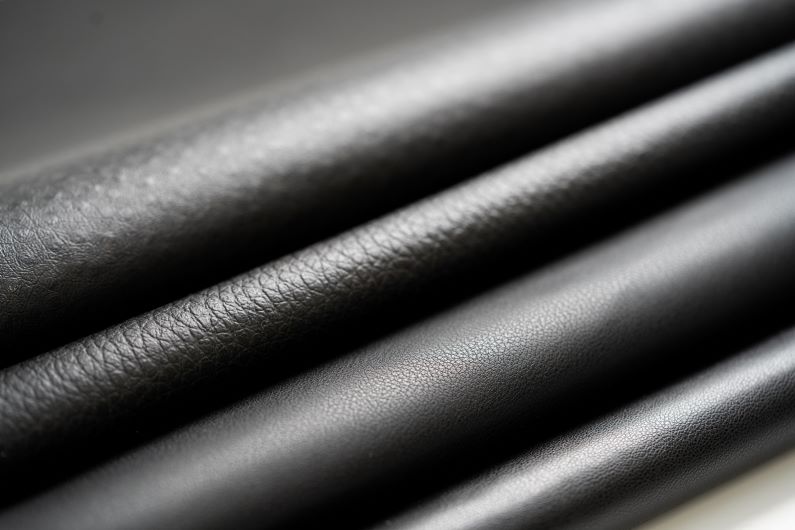
As companies look to improve sustainability, the use of waste streams from other industries as raw material feedstocks is seen as an attractive proposition. Strategic Allies Ltd (SAL) have highlighted this in the past (see our recent article – Valorising waste Streams) and believe that this practice can help contribute to a circular economy. However, there are certain industries where historically, this has been seen as impossible to achieve, such as the meat and leather industries where the consumer either uses up the product, or there is limited reusability of the material post-use. Another concern faced by companies when choosing a waste stream is whether the quality of the material will vary, or if there is enough supply of said material to meet their existing needs. Arda Biomaterials faced these concerns when looking to develop a leather-alternative and found that the waste stream they utilise could be both abundant, and consistent for the polymers they sought to valorise.
Arda Biomaterials is a start-up, founded in London, UK, in 2022, that is seeking to develop novel materials using brewer’s waste product. They have found that brewers spent grain (BSG), also known as draff, can be used to synthesise a leather analogue that can be used as a drop-in alternative for animal-based leather, with almost identical properties.
The story starts with Brett Cotten and TJ Edward Mitchell when they both signed up to Entrepreneur First. This accelerator encourages innovators to join a cohort, without a precise business concept, and form connections with other innovators to develop ideas. Brett and TJ met in a pub at the accelerator’s introductory drinks and immediately found synergy, discussing the potential to use plant-based proteins in industries other than the meat-alternative space. Soon, the two were experimenting with initial prototypes for a leather-alternative in TJ’s kitchen, using his chemistry expertise to optimise the protein extraction and polymerisation process. Since then, the company has filed IP, raised venture capital, built a laboratory, grown their team, won awards, worked with world class brewers and fashion brands, and this only the beginning!
Arda Biomaterials have developed New Grain™, a leather-like material derived from draff. The brewer’s spent grain is washed and processed to remove impurities and the protein is then extracted and modified. Biobased, biodegradable and non-toxic additives are then added to further modify the proteins. The solution is then concentrated and cast to produce sheets of “leather” which set and are cured to give the final material. At this stage, different backings can be added from sustainable fibres to add additional textures. At present, this is done as a batch process with sheets up to 1.1m x 1.6m (similar to the size of a cow hide). The aim is to make the process continuous (in their brand new lab) and make rolls of the material for customers.
The primary benefit of this technology, and one that is closest to the founders’ hearts, is that the process is animal and plastic-free. Related to this, no toxic chromium is required for tanning unlike the animal-derived leather alternative. Elsewhere, animal-free leather competitors often use polyurethane which does not accurately mimic the texture of leather, giving a plastic-like feel to the final product and prone to flaking over time. Arda Biomaterials do not use this petrochemical-derived material, with their biobased production process leading to a material with a texture virtually indistinguishable from animal-based leather. The use of draff is also advantageous as it is seen as a low-value waste stream and brewers in cities normally have to pay for its removal. This allows Arda Biomaterials to acquire the spent grain at no or low cost, leading to price parity and performance with animal-derived leather. The synthetic leather market is currently valued at around $40 billion and is set to grow at around 8% CAGR.
Arda Biomaterials are currently in the process of scaling up their technology, having demonstrated its feasibility and are setting up a pilot plant in central London for continuous manufacture and optimisation of New Grain™. They have already collaborated with the likes of Beavertown Brewery and BEEN London (sustainable fashion) to produce finished fashion products with their technology and aim to co-locate with a brewery by 2028 to commence mass production. Their extraction and manufacturing process is currently undergoing patent approval, and they hope to extend their product offering further in the future with other novel materials.
Arda Biomaterials recently completed their Seed funding round which will help them scale-up and see them through to 2026 when they will start their Series A funding. This comes in addition to their first pre-seed funding raise of $1.1m million led by the Clean Growth Fund in 2023. Brett and TJ are keen to hear from other innovators or experts in the protein engineering space, as well as those with expertise or equipment for protein extraction and leather production. The company has also recently announced that they have been selected to be in the sixth cohort of the 100+ Accelerator, running a pilot plant with the world’s largest brewer, AB InBev. Alongside these accomplishments, Arda Biomaterials made the Forbes 30 under 30 Europe Manufacturing & Industry list and have been featured in multiple news articles, including by the BBC. SAL can’t wait to see how the company grows and have been lucky enough to get a hands-on feel for some of the initial leather-like materials that have been produced. We can confirm that it feels indistinguishable to animal-based alternative!
Image courtesy of Arda Biomaterials