AquAffirm
Lab quality water contaminant measurements without the lab
Water monitoringWater quality testing is essential to make sure the water we drink, use in agriculture, or rely on in industry is safe. Around the world, different contaminants pose different risks. Some are universal, while others depend heavily on geography.
In the Middle East, for example, up to 60% of the water comes from desalination, where seawater is processed to remove salt. These facilities must constantly monitor salt levels to ensure the water is safe for use.
In places such as Bangladesh, high levels of arsenic in the groundwater have led to serious long‑term health issues. Although the problem has been known since the 1970s, communities are still affected today. Regular testing of arsenic levels is one of the World Health Organization’s recommended actions to help reduce these risks.
In the UK, chlorine levels must be carefully controlled to disinfect water without exceeding safe limits. At the same time, rising concern about “forever chemicals” (PFAS) has led regulators to demand reductions in these contaminants to protect long‑term public health.
Traditionally, water samples are sent to external laboratories for testing. While accurate, this approach is slow-making it less useful in situations where rapid results are needed.
Lab-quality measurements in the field
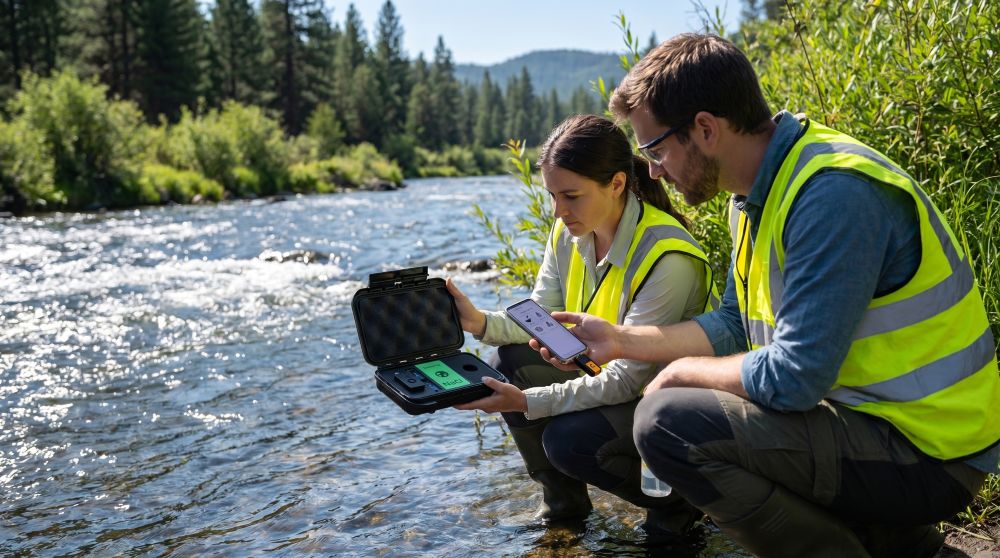
AquAffirm has developed a fast testing system that works with a smartphone. The testing strip is inserted into a digital reader which is plugged into the smart phone. A water sample is placed on the strip, with the detector providing an immediate quantitative measurement of the specific contaminant, reaching sensitivities down to parts per billion in some cases. The results are comparable to conventional laboratory testing. Their test strips are manufactured at scale by a partner, with the overall solution low cost compared to conventional methods.
Smartphone integration adds another benefit: automatic location tagging. This creates a digital map of contamination hotspots, giving users a clearer picture of where problems occur.
Striking gold – from gold mines to clean water
AquAffirm’s early research began with a surprising discovery: a type of bacteria thriving in an arsenic‑rich gold mine. Scientists isolated the enzyme that allowed the bacteria to survive, with the enzyme selectively binding to arsenic. From here, an idea was born, could this enzyme be exploited to identify arsenic?
Working with medical diagnostics experts at Imperial College London, the team created their first electrochemical sensors. When the enzyme binds to arsenic, it produces a measurable electrical signal that reveals the arsenic concentration.
Electrochemical sensors
After demonstrating success with arsenic detection, the team expanded their technology to other contaminants using different enzymes or aptamers (which are single strands of DNA which can bind to molecular targets). In each case, specific binding and changing electrochemical signals are the sensing method employed. AquAffirm’s portfolio now includes:
Salination: Their first commercially available sensor detects the level of salt in water. It is widely used in Gulf desalination plants to support continuous quality control and improve operational efficiency.
“Forever chemicals” (PFAS): AquAffirm has a successful proof of concept device capable of detecting selected PFAS compounds. As stricter drinking‑water limits are expected soon, this technology is well‑positioned to help monitor these chemicals.
Chlorine: Nearing commercialisation, these sensors measure chlorine concentrations. Chlorine is used as a disinfectant in water, killing harmful bacteria. The safe concentration of chlorine in water sits in a very small range window, ensuring there is sufficient chlorine to kill bacteria, but not too much that would be harmful to consumers, with monitoring important.
Antibiotics: They are currently working on a series of sensors designed to help the testing of antibiotics. This is particularly relevant in pharmaceutical manufacturing to monitor antibiotic levels in wastewater, helping reduce the risks of antibiotic resistance.
Custom sensing solutions: With a large library of enzymes and aptamers already investigated, and extensive know-how in the space, AquAffirm can create bespoke sensors tailored to specific customer needs. Additionally, they are working with a partner to help optimise their enzyme and aptamer designs further using sophisticated artificial intelligence (AI).
Forensic testing
One emerging use for AquAffirm’s sensors is forensic water analysis. For example, if water pools in a field, the sensors can help determine whether it comes from a leaking pipe or is simply rainwater—by comparing chlorine levels. This can help water companies and agricultural operators identify leaks and prevent unnecessary water loss.
What next?
AquAffirm is actively looking for new users for their sensing systems. Their salinity sensor is commercially available and the chlorine sensor is close to launch. Their arsenic sensors are already being trialled alongside partners such as UNICEF as part of the Arsenic-4M project which is hoping to measure and map arsenic levels in Bangladesh. They are also seeking partners with specialised sensing needs and are currently raising investment to support further growth.
If you are interested in speaking with AquAffirm, please reach out to Strategic Allies and we would be happy to make an introduction.