AilArian
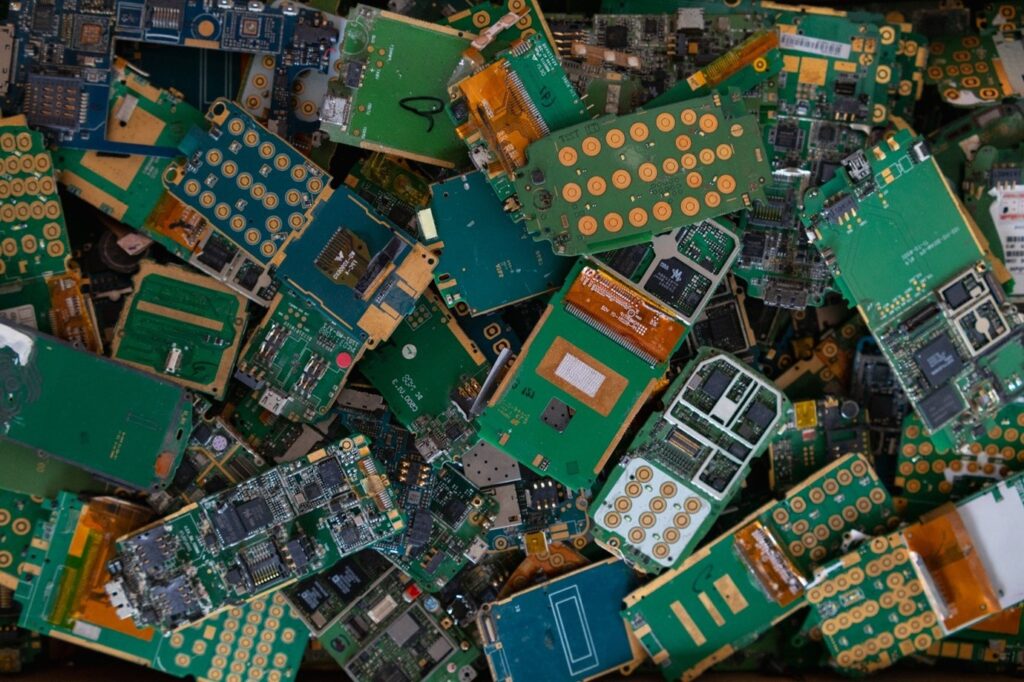
Electronic waste (E-waste) is an issue we should all be concerned about, with a reported 62 million tonnes produced globally in 2022 alone. Only around 20% was recycled, with huge volumes being placed in landfill. Even the recycling process is a nightmare, requiring harsh chemicals and dangerous methods to recover precious metals, because of this, many countries simply export their e-waste abroad. As we use more and more electronics, innovative solutions to solve this waste problem are essential, here AilArian enter the picture with their new silver conductive inks!
You might have heard of the following phrase in relation to becoming more sustainable, “Reduce, Reuse, Recycle”, and AilArian are helping to make the printed electronic sector more sustainable solving the Reduce and Recycle problems.
AilArian is a spin-out from Swansea University, which is home to the Welsh Centre for Printing and Coating. The company’s CEO and inventor, Dr James Claypole, has been active in printed electronics for over 10 years, during his postdoctoral research he developed AilArian’s lead material, a recyclable silver ink in an effort to assist e-waste recycling. Following academic development and an initial patent filing he undertook the Innovate UK’s ICURe Explore program to determine the commercial opportunity of this material. They undertook 3 more months of business development through the ICURe Exploit program to bring together a strong business model. This year they were awarded an ICURe Follow on grant and with the help of angel investors AilArian was spun-out in October 2024. Their name captures both their product and their Welsh Heritage, with ailgylchu (or Ail for short) meaning recycle and Arian translating to silver.
Silver inks are essential for printed electronics which is a key process required for technologies including smart packaging and textiles, healthcare and other sensors, with silver inks providing the only viable avenue for highly conductive inks. AilArian have developed and patented a unique silver ink which contains ferromagnetic components. By making the ink ferromagnetic it allows the ink to be easily recovered from a substrate. In lab-based tests, they have achieved a 95% recovery rate of silver from conventional substrate surfaces (recycle). The recovered silver can then be reformulated into an ink and used in printed electronic products. This circular approach to electronics is unique (see image for their process), with AilArian now looking to take their product outside the lab and test real world products.
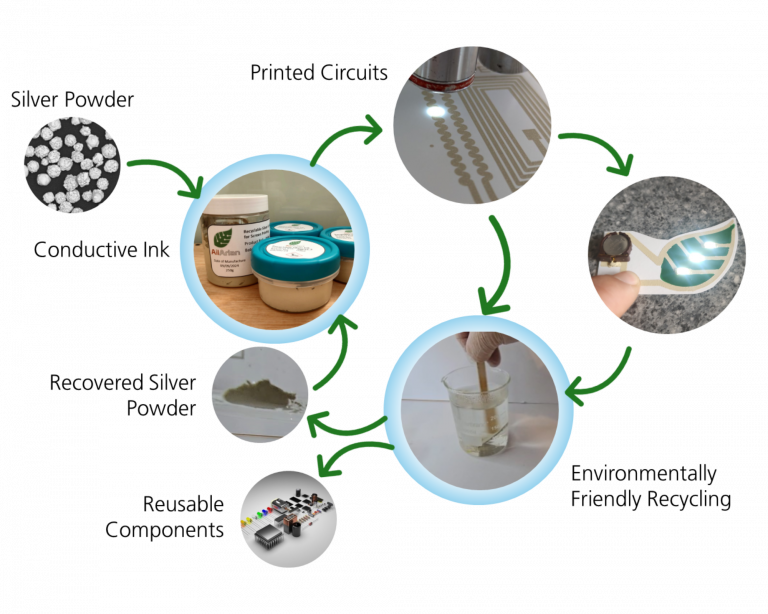
An additional benefit of AilArian’s inks is that they actually contain less silver (reduce) due to the introduction of ferrite materials, while having a minimal impact on the performance. Calculations indicate that their inks provide a 75% reduction in scope-3 carbon emissions compared to market leading silver inks.
AilArian are optimising their ink formulations further to continually improve performance and recovery. Different printed electronic applications will require different formulations, with AilArian able to provide bespoke solutions for customer’s products. They are hoping to work with customers using printed electronics already and can provide free samples. It is this real world interaction which is key to aid development and make this remarkable product a commercial reality.
Eventually they want to become a supplier and recycler for customers, providing this end-to-end solution. If you are interested in getting your hands on AilArian’s circular silver ink please reach out to Dr James Claypole and the team! We are looking forward to seeing how they develop and believe their ink is truly a game changer to produce sustainable electronics!
Images courtesy of Vecteezy & AilArian