Biofonic
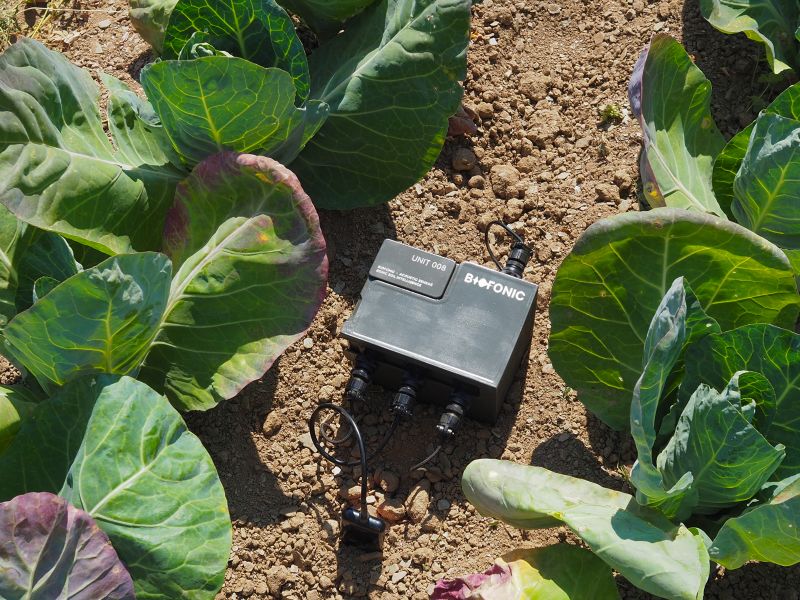
The AI ‘Heartrate Monitor’ Revolutionising Soil Health Monitoring
The importance of Soil HealthMost of us rarely give soil much thought. It is simply the ground beneath our feet: something we walk on, build on, farm and garden with. Yet soil is one of the most important living systems on the planet, quietly supporting biodiversity.
More than half of all species on Earth are estimated to live in soil, including fungi, bacteria, plants and other small creatures. Soil also underpins the food we eat, providing the foundation for over 95% of the calories consumed by humans. It plays a vital role in the climate too, storing more carbon than all the world’s forests and plants combined. Even modern medicine owes a debt to soil as most clinically approved antibiotics were originally discovered from soil bacteria, another reason why ongoing monitoring of soil ecosystems matters so much
Soil touches almost every part of our lives, even if we rarely notice it. But this essential resource is under pressure. Around the world, soils are being lost through erosion and, in many places, soil is becoming less healthy and less productive. Intensive farming has helped increase food production, but it can also leave soils with too little time to recover and regenerate.
Why Traditional Soil Testing Falls Short
Encouragingly, there is growing interest in farming practices that can help restore and protect soil health, including regenerative farming. But one challenge remains: how do farmers know whether these approaches are actually working? Measuring soil health is not straightforward, and previous soil testing methods have not always given farmers a clear, practical picture of what is happening beneath the surface.
Traditional soil testing usually involves taking a core sample from a field and sending it to a laboratory for analysis. The lab can then measure different indicators of soil health. This can provide useful information, but it also has clear limitations. Firstly, results can take time, especially when samples need to be shipped to external labs, and secondly, a single core sample only offers a snapshot of one place at one moment. As a result, important changes in the wider soil environment may be missed.
Biofonic: a continuous monitor for soil health
Biofonic is a London-based start-up developing new ways to help farmers and land managers understand what is happening in their soil. The company was founded by Alex Park, who has a background in biotechnology. She was inspired by the amount of health data now available from everyday wearable devices, such as smart watches. If a simple sensor can track signs of human health in real time, she wondered, could a similar approach be used to monitor soil health?
That question led Alex to develop a technology that uses sound and artificial intelligence to assess soil health. It can be compared to continuous health-monitoring devices such as the heart-rate monitor in a smartwatch or a wearable glucose monitor used by people with diabetes, except here, the patient is the soil.
How Acoustic Monitoring Works
As mentioned earlier, soil is full of life. Much of that life is too small, slow-moving or quiet for us to notice, but some organisms do create tiny sounds as they move, feed and interact underground. The challenge is knowing what to listen for. Biofonic’s technology is designed to do exactly that: listen to soil and detect acoustic patterns that can help distinguish between healthier and less healthy soils.
In healthy soil, a wide variety of organisms can survive and thrive, creating a richer soundscape beneath the surface. In degraded or unhealthy soil, that activity may be reduced, with fewer insects and other organisms able to live there. By comparing these sound patterns, Biofonic can build a picture of the biological activity taking place underground.
The company uses sensitive microphones to capture these sounds and understand what is happening in the soil. Its system focuses on specific acoustic signals linked to key soil organisms, identified through research as indicators of soil health. The range of species detected can provide insight into the soil’s biodiversity, giving farmers and land managers another way to assess how healthy their soil is.
Filtering Noise with Machine Learning
In practice, however, these sounds are very quiet, which makes them difficult to capture and interpret. Outside the controlled conditions of a laboratory, microphones also pick up many other noises that have nothing to do with soil life. In a working field, tractors and other machinery can drown out the subtle biological signals, while even rainfall can make data collection more difficult. So how can this innovation work in the real world?
Biofonic has tackled this challenge using machine learning. Its system is trained to filter out background noise and focus on the signals that matter, helping distinguish genuine biological activity from the many other sounds present in the environment. This allows soil sounds to be captured and interpreted more reliably, even outside the lab.
Soil acoustics in action: Real-World Trials
Biofonic’s acoustic technology is designed to offer an easy, non-invasive way to monitor soil health. The company has recently been optimising its hardware and has filed patents for its microphones, while its machine learning model has been developed alongside Medusa Labs.
The system has already been tested with farmers, helping show which fields are performing well and which may need attention. In trials, Biofonic was able to clearly hear the difference between a conventionally managed field and one that had undergone regenerative farming.
The technology can also provide insight into how soil changes over time. By comparing acoustic data collected at different times, Biofonic can assess whether particular practices, treatments or chemicals appear to be helping or hindering soil health. This gives users a more reliable view of the changing soil, helping them make better-informed decisions about how to manage their land.
Partnering with Biofonic
Soil biodiversity has never been systematically benchmarked, but Biofonic is changing that. Their technology gives farmers and land managers a new kind of intelligence: insight into the living, evolving nature of soil, delivered before things become visible. Think of it as a sixth sense for the ground beneath your feet.
Crucially, Biofonic isn’t looking to replace farmers’ expertise; it’s designed to complement it, layering data-driven insight on top of the knowledge and instincts that experienced growers already have.
Biofonic is actively seeking partners to trial their technology across three key areas:
Farmers: There’s strong interest from the farming community, and Biofonic wants to understand what outputs would be most useful in practice. They’re developing an interface designed to support real-world decision-making, shaped by the people who’ll actually use it.
Agricultural chemical providers: This is particularly relevant for suppliers of bio-chemical inputs and soil-biome-friendly products. Biofonic can help these suppliers better understand how their products affect soil health, adding a new dimension to existing knowledge and practice.
Environmental organisations: Groups studying soil health at scale, including the effects of climate change, will find the technology well-suited to broad monitoring and research.
Biofonic is also open to conversations with other sectors who see potential applications.
Biofonic is making some serious noise. They’ve received grant funding from Innovate UK, won the 2025 edition of the Greenhouse accelerator demo day run by Undaunted, and won the Farming Forward Innovation Challenge from the Environmental Space Living Lab
If you are interested in speaking with Biofonic, please reach out to Strategic Allies and we would be happy to make an introduction.