GLP-1 and Food Innovation: Have Manufacturers Missed a Trick?

How GLP-1 drugs are reshaping the food industry
The pharmaceutical industry is now, more than ever before, influencing what ends up in our shopping baskets. Once known primarily for developing treatments for diabetes, companies such as Novo Nordisk and Eli Lilly have become some of the world’s most valuable businesses as demand for GLP-1 receptor agonists has soared. An estimated 1.5 to 1.6 million UK adults use GLP-1 agonists (e.g., Wegovy, Ozempic, Mounjaro) for weight loss, with usage doubling in a single year. The recent MHRA (Medicines and Healthcare products Regulatory Agency) approval of the convenient, daily oral Wegovy pill will likely boost that number further. Their success is not only transforming healthcare—it is reshaping consumer eating habits, disrupting food purchasing behaviour and creating billions of dollars in market value in the process. As millions of people consume fewer calories, seek healthier foods and prioritise nutrition over indulgence, food manufacturers face one of the most significant shifts in consumer demand in decades. Yet while pharmaceutical companies have moved quickly to capitalise on this revolution, much of the food industry has remained focused on the threat of declining consumption rather than the opportunity to develop products tailored to a new generation of consumers. The question is no longer whether GLP-1 drugs will change the food industry—they already are. The real question is whether food companies have missed one of the biggest innovation opportunities of the decade.
Why the food industry’s response to GLP-1 has been dominated by fear
Since the rapid rise of GLP-1 medicines, the food industry’s response has been shaped largely by fear. Headlines have focused on shrinking appetites, falling demand for snacks and confectionery, and the potential for obesity medications to permanently erode food sales. Investor attention has centred on which companies stand to lose the most as consumers eat less, prompting executives to defend growth forecasts and reassure markets that the impact will be manageable. For example, Mondelēz CEO Dirk Van de Put argued that concerns had been “overblown”, estimating only a modest long-term impact on volumes and suggesting that smaller portion sizes, rather than wholesale product reformulation, would be the appropriate response. Other companies publicly downplayed the impact, but strategically started to modify offerings to specifically target GLP-1 users. Back in 2023, PepsiCo CEO Ramon Laguarta described the direct impact of GLP-1 drugs on business as “negligible”. However, in early 2026, Laguarta acknowledged that the company now assumes “there will be a broader adoption of GLP-1 medicines” and that consumers are increasingly gravitating towards “protein, fibre, hydration and…smaller portions,” adding that PepsiCo had already been adapting its portfolio for this “new reality with the consumer”. Perhaps this demonstrates that companies are shifting away from asking ‘how much less will people eat?’, and instead are focussing on ‘what foods will people taking GLP-1 medicines actively seek out?’.
GLP-1 and changing nutritional behaviour: the real shift
In line with the observations at PepsiCo, GLP-1 drugs haven’t just caused people to eat less, they have fundamentally altered nutritional behaviour. Patients report eating smaller, more frequent meals and becoming more selective about the nutritional quality of the foods they consume. Households adopting GLP-1 show a 5.5% decrease in grocery spending within 6 months, mainly driven by reductions in ultra-processed, calorie-dense foods. As food habits evolve, so do customer expectations of the foods on the supermarket shelf. Every calorie has to work harder, and every mouthful needs to deliver protein, vitamins, minerals and fibre. This consumer group is no longer buying indulgence or convenience, they are buying products that deliver satiety, energy and nutritional value in smaller servings. So perhaps food companies haven’t missed a trick, perhaps this is a significant innovation opportunity – GLP-1 drugs are the catalyst for “Nutrition 2.0”, and it is for food companies to define what this new era of food will look like.
Where are the GLP-1 food innovation opportunities?
For decades, the food industry has competed to deliver more flavour, more convenience and greater value. The GLP-1 era is changing the rules. Protein, micronutrient density, digestive tolerance and portion optimisation are becoming central design principles rather than niche health claims. Marketing existing products as “GLP-1 friendly” won’t be enough, products must address functional needs, and this creates opportunity for innovation across formulation, ingredients, packaging, meal occasions and even digital services. Some examples are provided below.
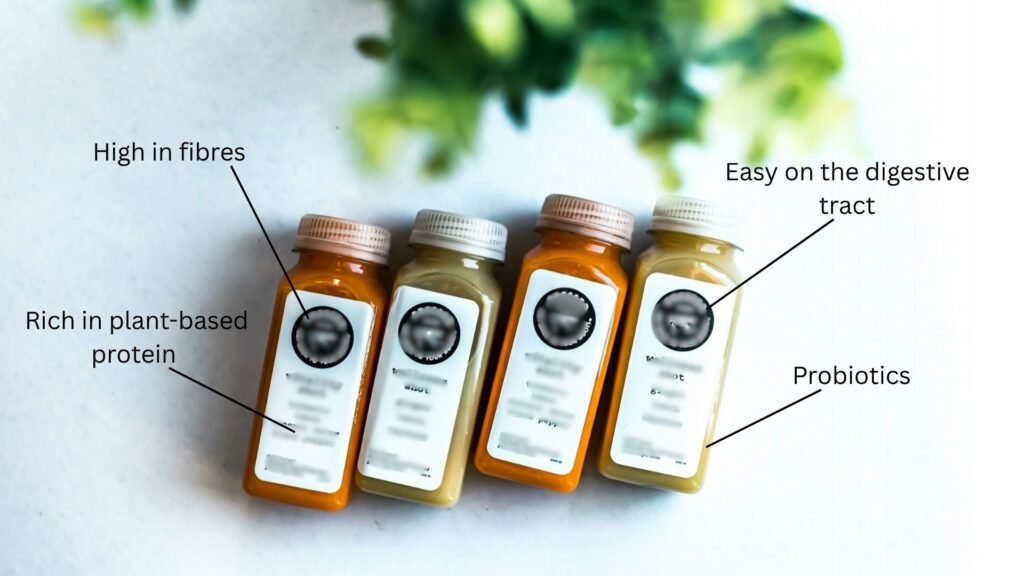
- High protein, nutrient-dense foods – there is an opportunity to deliver nutrient-dense food and beverages in convenient formats such as ready meals, yogurts, cereals and shots. Marks and Spencer have opted for this approach, and have launched a Nutrient Dense range of shots, breads, ready-meals and snacks made from “whole-food, store-cupboard ingredients bursting with flavour, fibre, vitamins and minerals”.
- Foods designed for digestive comfort – Many GLP-1 users experience nausea, bloating, reflux and/or slower gastric emptying. Food companies could consider developing products that are easier to digest, moderate in fibre, gentle on the stomach, or palatable despite nausea. In support, Kerry has launched a shelf-stable postbiotic that offers clinically validated digestive benefits to adults actively using GLP-1 medications. Plenibiotic™ can be formulated into multiple products including functional beverages, bars, capsules and powders.
- Functional hydration – Reduced food intake often leads to lower fluid consumption, which can result in dehydration and nutrient depletion. There is scope for brands to encourage water intake and deliver functional hydration in the form of electrolytes and micronutrients. Companies including Applied Nutrition are promoting electrolyte sachets as “ideal for maintaining fluid balance throughout a GLP-1 weight-management programme”.
- Precision Nutrition – The rise of GLP-1 therapies is also accelerating the broader trend towards personalised nutrition, as consumers increasingly expect foods that support their specific health needs rather than generic dietary recommendations. Solutions may include tailored meal plans for different stages of GLP-1 treatment, digital nutrition coaching, personalised protein recommendations, or integrated nutrition apps. For example, Nestlé Health Science launched a GLP-1 nutrition support platform in the U.S. to offer consumers holistic and personalised care across their diet with tailored products from brands including Garden of Life, Nature’s Bounty and Boost.
- Packaging innovation – Packaging is often overlooked as an opportunity space, but reduced food consumption and smaller portion sizes open the door to resealable packaging, portion-controlled packaging, multi-compartment meals and packaging that preserves freshness over multiple eating occasions. Reduced food waste could become an important differentiator in the battle for market share.
The winners won’t sell more food, they’ll sell better nutrition
The GLP-1 revolution represents far more than a challenge to traditional food manufacturers, it marks a fundamental shift in what consumers expect from the foods they eat. Success will no longer be defined by selling larger portions or encouraging greater consumption, but by delivering foods that maximise nutritional value in every bite. Companies that embrace this shift will move beyond simply reformulating existing products to creating new categories of nutrient-dense, protein-rich, personalised and clinically relevant nutrition that support healthier lifestyles. Those that continue to view GLP-1 solely as a threat to sales risk missing one of the most significant food innovation opportunities of the decade.
For food companies, ingredient suppliers and retailers alike, the question is no longer whether GLP-1 therapies will reshape the industry—it is how quickly they can adapt. The organisations that invest now in understanding emerging consumer needs, identifying innovation opportunities and developing differentiated products will be best positioned to lead this new era of nutrition.
If your organisation is exploring how GLP-1 therapies could impact your markets, products or innovation strategy, the team at Strategic Allies would be delighted to help. To discuss the opportunities and develop a roadmap for growth, please contact john@strategicallies.co.uk.