Future-Proof Farming: Bold Moves (Part 2)
Agriculture is under mounting pressure to deliver more food with fewer emissions. Even as production becomes more efficient, direct greenhouse gas (GHG) emissions from farming are projected to rise by 6% by 2034. Efficiency gains alone won’t be enough—bold innovations are needed to bend the curve.
In part one of this series, we explored how regenerative agriculture, climate-friendly fertilisers, and smarter water management are already reshaping farming in a warming world. Now, in part two, we turn to breakthroughs that are pushing the boundaries further: controlled-environment farming, climate-resilient crops, and curbing cattle emissions.
Vertical Farming and Controlled Environment Agriculture (CEA)
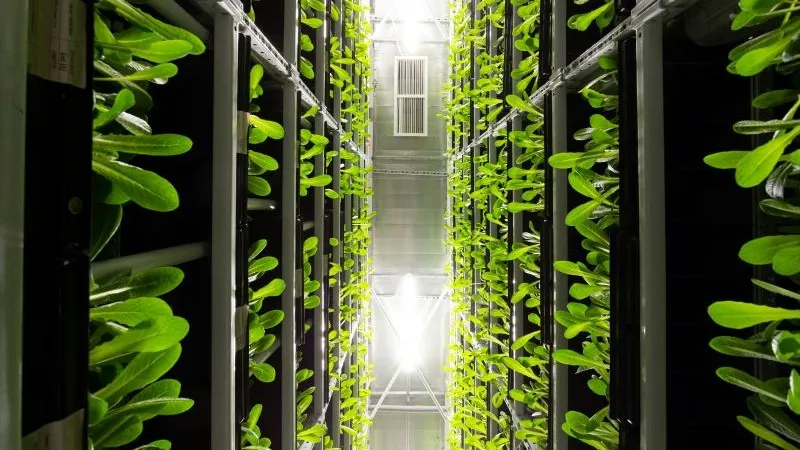
With climate change making traditional outdoor farming less predictable, CEA offers a controlled, resource-efficient alternative—though its full sustainability potential is yet to be realised. Recent research highlights strong gains in water and pesticide reduction, food miles, and urban food access, but also notes challenges around high capital costs, energy demand, and limited large-scale profitability. Life cycle analysis and robust social impact studies remain scarce, and optimising internal growing environments—particularly with renewable energy—will be key. Despite these hurdles, partnerships between industry, academia, and policymakers are driving advances in plant science, AI-driven climate control, and localised supply chains, bringing CEA closer to delivering on its environmental and social promise.
Infarm, a Certified B Corporation™ from Germany, partners with major retail chains across North America and Europe to bring modular vertical farms into urban spaces. Its systems can grow over 500,000 plants annually in just 40m², using 95% less land and water than conventional farming, with no chemical pesticides—saving millions of litres of water, thousands of square metres of land, and significant food miles.
AeroFarms specialises in aeroponics microgreens (shoots of salad vegetables), holding 70% of the U.S. retail market share. Despite undergoing restructuring in 2023, the company has rebounded strongly, securing new equity funding and refinancing its debt to sustain operations at its state-of-the-art Virginia farm. AeroFarms continues to lead in aeroponic innovation, growing crops without soil and using minimal water, all while strengthening local food systems.
Dyson Farming (UK) has taken a unique approach by integrating CEA into a circular farming system. Its new 26-acre glasshouse in Lincolnshire produces 1,250 tonnes of sustainable, out-of-season strawberries annually, powered by renewable electricity and surplus heat from an on-site anaerobic digester. This setup reduces food miles, lengthens the British strawberry season, and uses harvested rainwater for irrigation. Advanced climate control systems, swinging gutters to optimise space, and plans for robotic picking make it a model of high-tech, sustainable horticulture—combining food security with carbon reduction.
Climate-Resilient Crop Genetics
Breeding crops to withstand climate extremes is a cornerstone of future-proof agriculture. Gene editing is a way of making very precise changes to the DNA of an organism. These types of changes occur naturally but they don’t happen very often. Gene editing allows to immediately introduce genetic improvements, significantly speeding up the breeding process – like natural evolution on fast forward.
Cibus is a technology company based in San Diego, California, that develops and licenses traits to seed companies for royalties on seed sales. Climate change is one of the 3 major plant challenges they address together with diseases and pests through their Rapid Trait Development System™ (RTDS®) and Trait Machine™. The US. Department of Agriculture has just officially approved two of their new gene-edited canola traits as non GMOs,. Unlike traditional GMOs, which rely on inserting foreign DNA into a plant’s genome, RTDS® enables precise edits without any recombinant DNA.
Tropic Biosciences (UK) is using its proprietary GEiGS® platform and other cutting-edge gene editing using technologies including CRISPR, to develop disease-resistant and drought-tolerant varieties of bananas, coffee, and rice – key crops in tropical regions.
Bayer Crop Science continues to invest in climate-adaptive traits through its Open Innovation platform, collaborating with start-ups and universities to fast-track R&D. Precision breeding is central to this effort, enabling crops that require fewer inputs while withstanding drought, heat, and emerging pests. Bayer’s pipeline includes innovations such as Short Stature Corn, designed to improve resilience and yields under climate stress, while its global R&D investment of €2.5 billion per year ensures a steady flow of new varieties to strengthen food security in a warming world.
Reducing Methane from Livestock
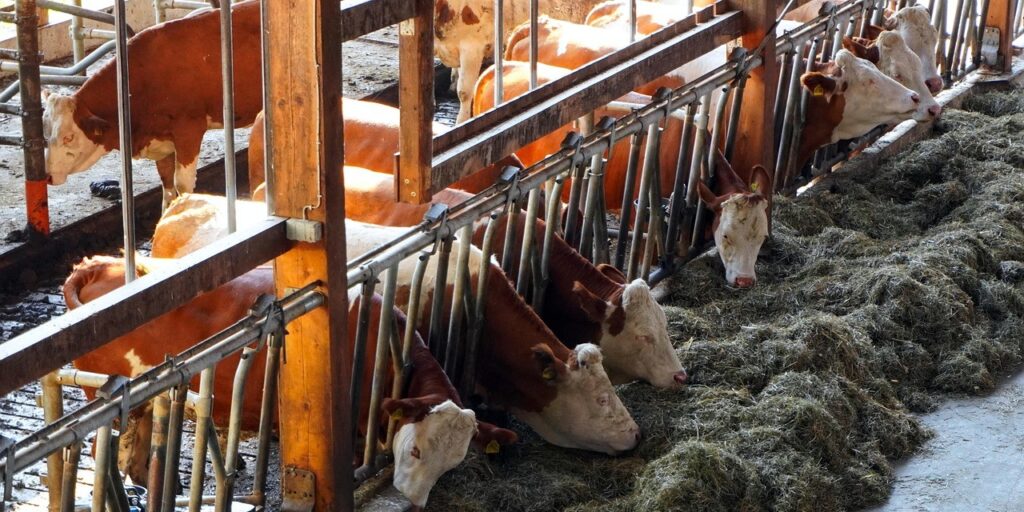
Livestock are responsible for around two-thirds of agriculture’s greenhouse gas emissions, with methane from enteric fermentation (the digestion process that leads to methane-rich belches) being the main culprit. With global demand for beef projected to rise by 13% by 2034, cutting these emissions is essential for meeting climate targets while ensuring food security. A wave of innovation is tackling this challenge – from rethinking feed additives to exploring the potential of gene editing of both cattle and their gut microbes.
DSM-Firmenich’s Bovaer® is probably the best-known methane-reducing feed additive though many more are being developed such as Lome® from Volta Greentech in Sweden or SEAFEED™ from Australia’s Sea Forest, a 2023 Earthshot Prize Finalist (both made from seaweed). Bovaer® works by suppressing enzyme activity in the cow’s rumen, reducing methane by around 30% in dairy cows and up to 45% in beef cattle. It is the most extensively studied and scientifically proven solution to the challenge of burped methane to date and is already approved for sale in more than 65 countries.
ZELP (UK) is pioneering a wearable device that captures methane directly as cows exhale and oxidises it into carbon dioxide and water vapour, a process that would otherwise take a decade in the atmosphere. By accelerating this reaction, ZELP’s technology reduces the climate impact of methane immediately, with trials indicating reductions of up to 50%. Unlike feed additives, the device can be applied across all livestock systems, making it highly scalable.
Ruminant BioTech , a start-up from New Zealand, has designed a slow-release device that delivers methane-inhibiting compounds directly into the cow’s stomach. The bolus remains active for up to six months and again is particularly valuable for grass-fed cattle, where feed additives are harder to administer. Field trials have reported methane reductions of over 70% across a three-month period.
The Road Ahead: Collaboration is Key
From Controlled Environment Agriculture (CEA) to seaweed-fed cattle, the farming industry is transforming at speed. No single company can tackle the climate challenge alone. The most successful solutions come from cross-sector partnerships, start-up / corporate collaborations, and open innovation.
At Strategic Allies Ltd, we help our clients identify and engage with these leaders—from biotech start-ups to global machinery giants.
If your business wants to adapt to and lead in the climate-driven agrifood transition, now is the time to explore new partnerships and technologies.
Interested in uncovering the right innovation partner? Get in touch with John Allies and/or Sophie Graves to explore how we can help.